

Ruchi Parihar
MA Clinical Psychology
20 min read
July 18, 2026
What Is Personality?
Personality is the relatively stable pattern of thoughts, feelings, and behaviours that makes each person recognizably themselves across different situations and over time. It's why one child dives headfirst into a new group of kids at recess while another hangs back and watches first, and why both responses can be perfectly healthy.
Psychologists usually describe personality at two levels: thevisible layer what people say and do, and the underlying traits that generate that behaviour. A single outburst doesn't define a trait; it's the consistent pattern across many moments, many settings that reveals the shape of someone's personality.
The most widely used model for describing that shape is theBig Five five broad dimensions that together account for most of the meaningful variation in how people think, feel, and act.

The Five Factors Of Personality
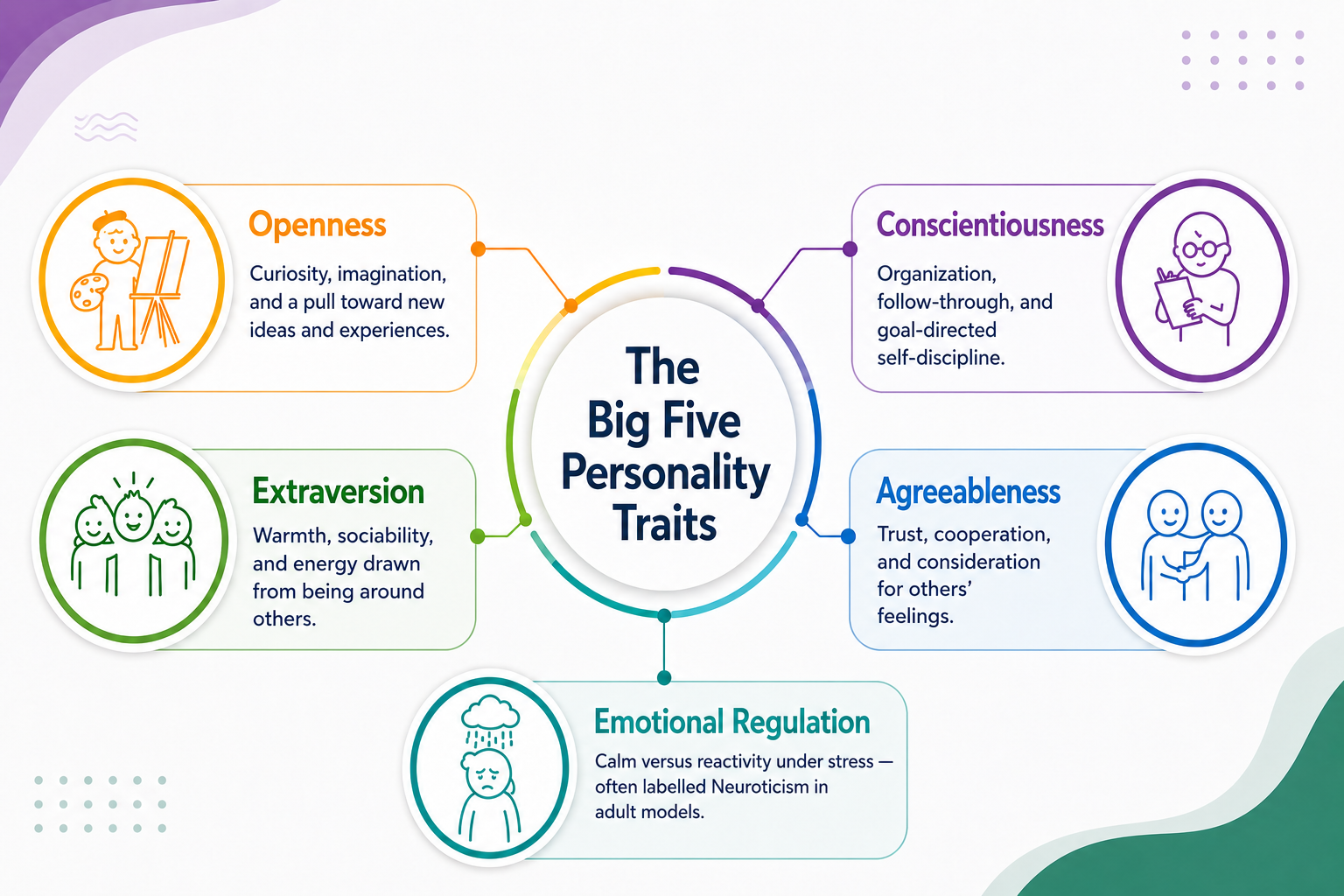
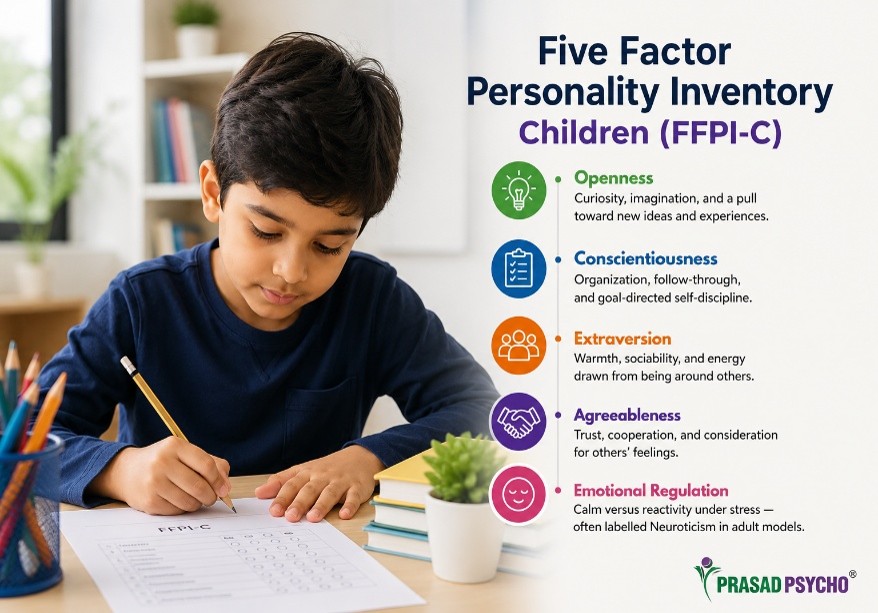
Decades of research converge on five broad traits often remembered by the acronym OCEAN, the Big Five personality traits that capture most of the meaningful differences in how people think, feel, and behave.
Can personality change as children grow?
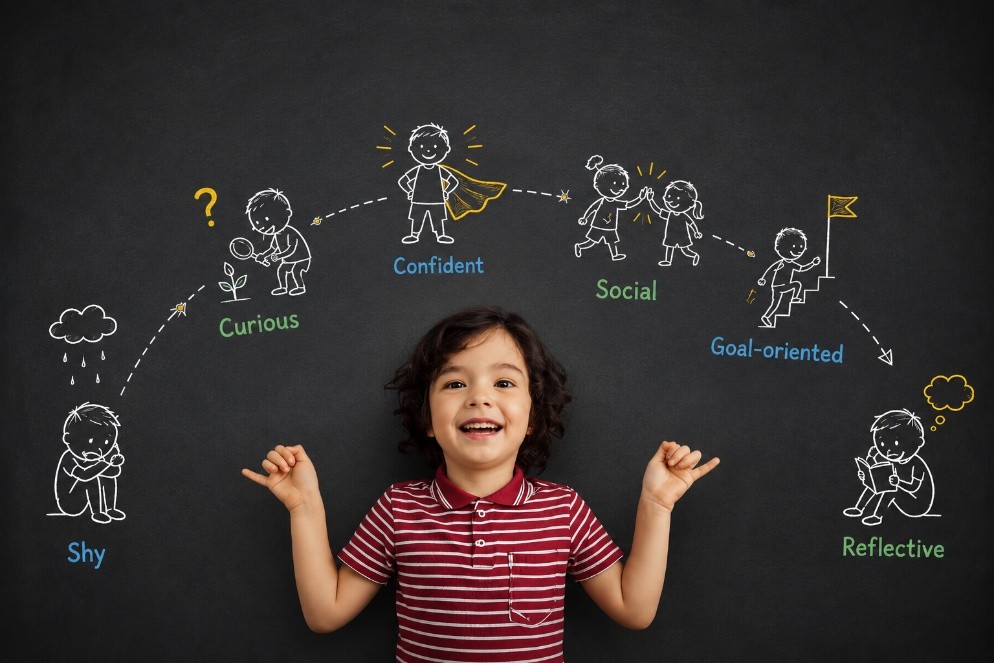
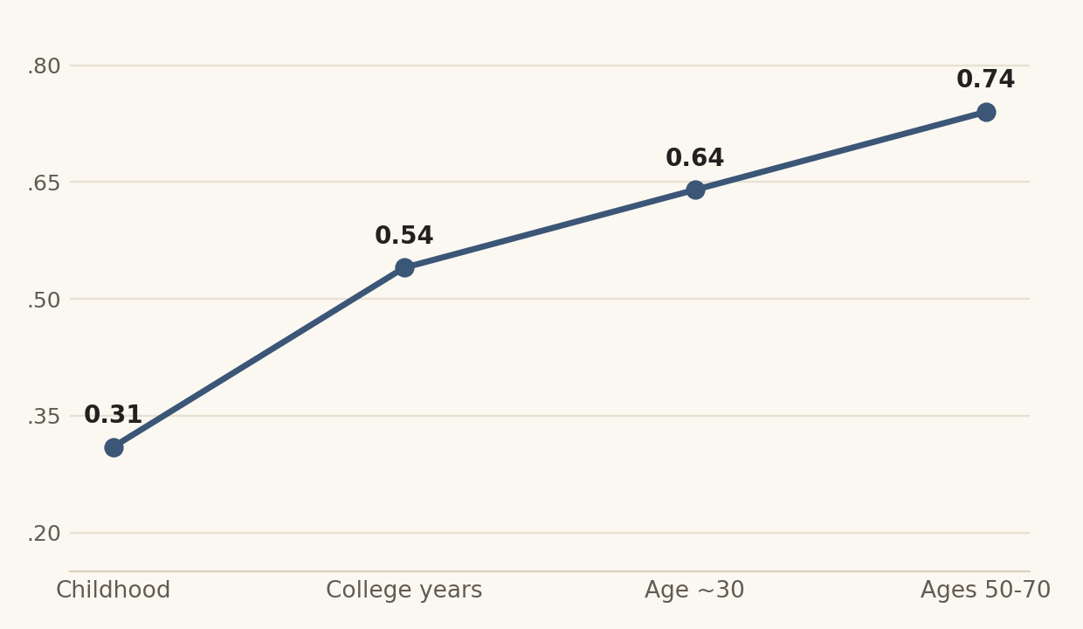
Yes, and that's normal. Personality in childhood is genuinely more fluid than it will be in adulthood. A landmark meta-analysis of longitudinal studies found that the consistency of personality traits over time starts relatively low in childhood and steadily climbs through adolescence and early adulthood, before levelling off in mid-life.
That means a child's traits today are real and measurable, but they aren't a permanent verdict. Temperament tends to firm up gradually as identity, coping skills, and self-understanding mature — which is exactly why periodic, age-appropriate assessment is more useful than a single snapshot taken once and never revisited.
Personality becomes more stable with age
Mean trait consistency (test–retest correlation) by life stage — Roberts & DelVecchio (2000)
Introducing the Five Factor Personality Inventory Children
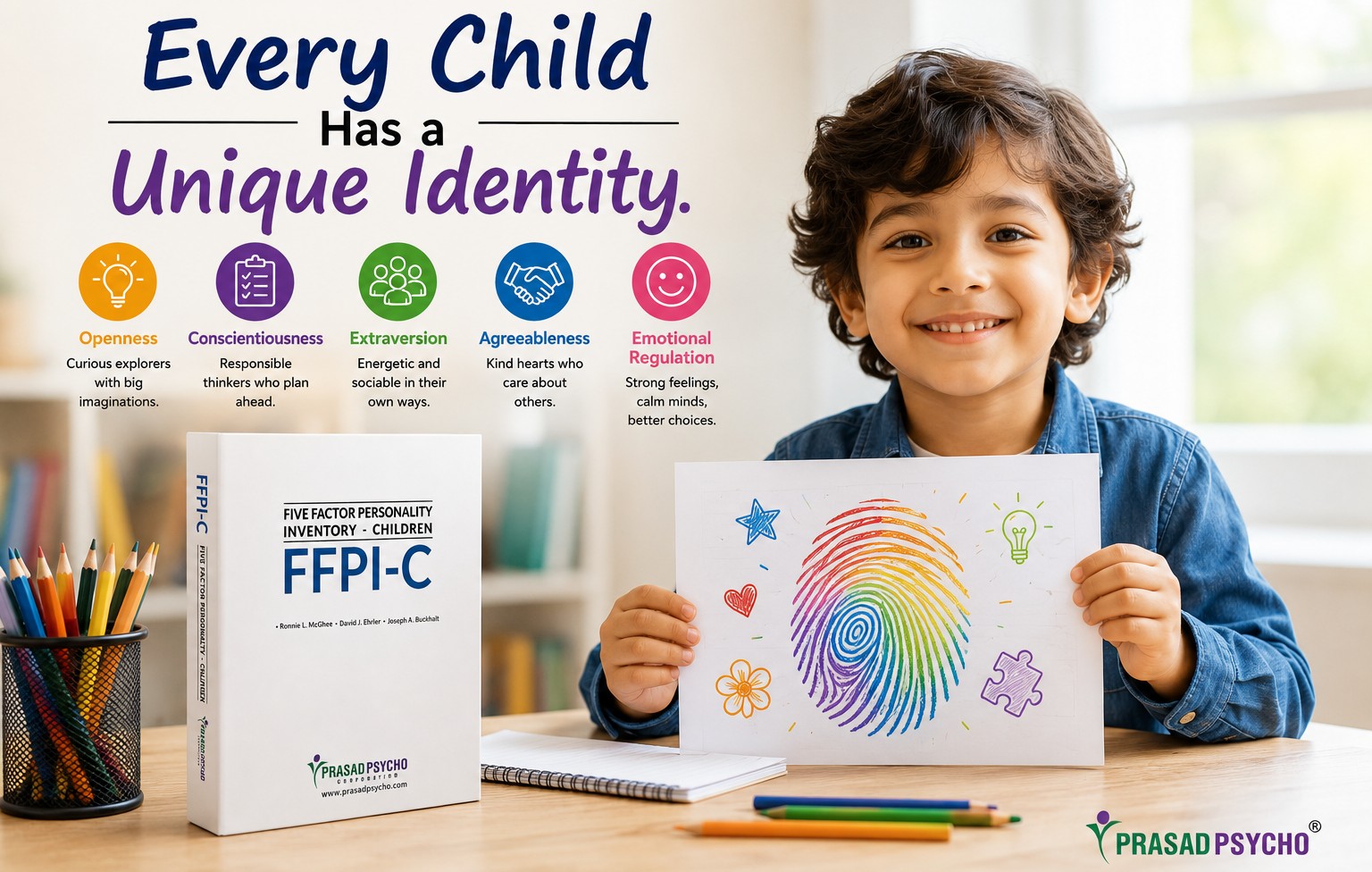
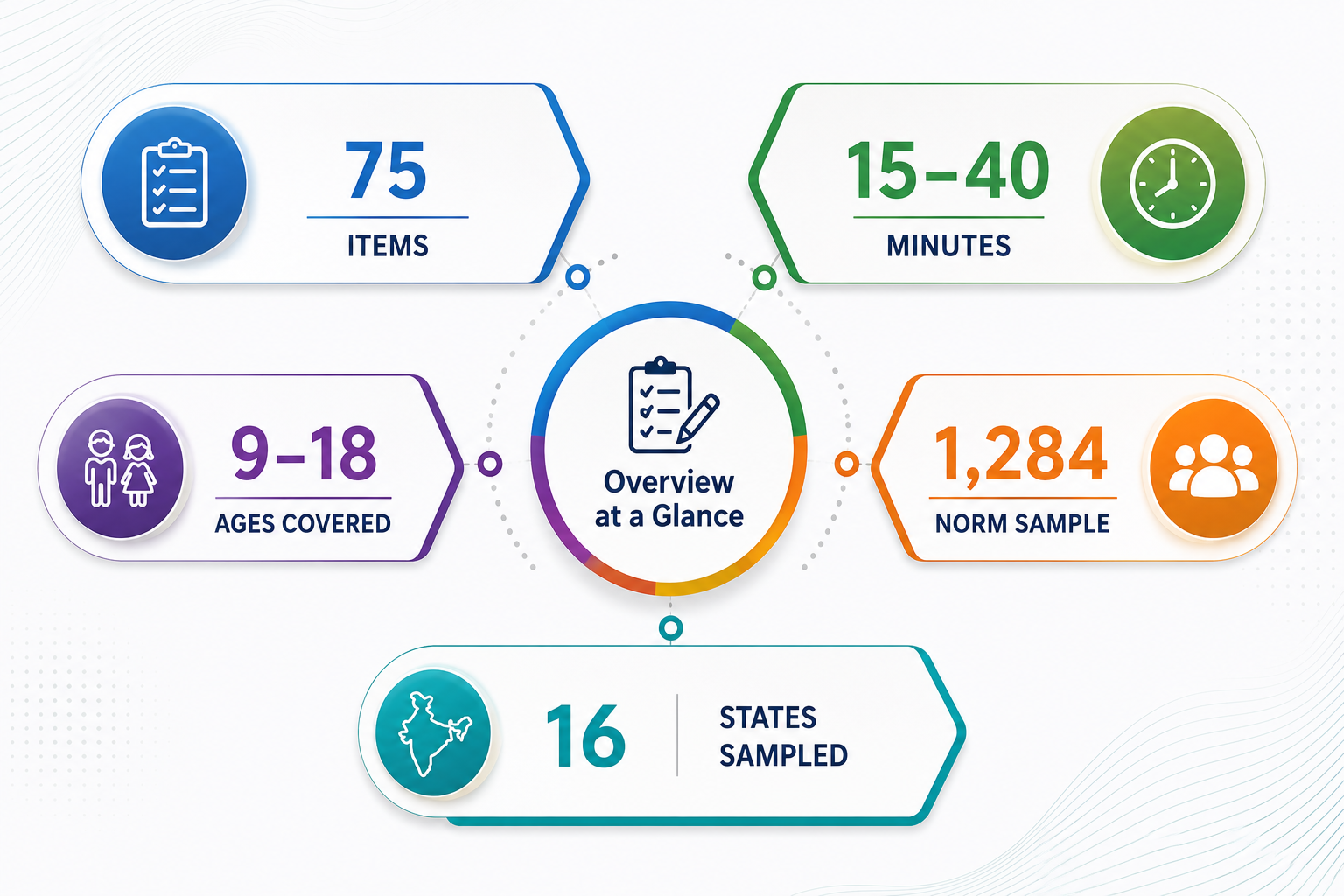
Developed by McGhee, Ehrler, and Buckhalt and published by PRO-ED, the FFPI-C translates the Big Five model into a standardized, norm-referenced self-report tool built specifically for youth ages 9 through 18. Children respond to 75 items, each presenting two opposing statements, choosing whichever fits them best. The result is a full trait profile raw scores, T-scores, and percentiles across all five factors built on a normative sample of 1,284 youth from 16 states, benchmarked against U.S. Census data.
Its validity has also been tested against established measures: in older adolescents, matching FFPI-C and NEO Five-Factor Inventory scales showed medium-to-large correlations.
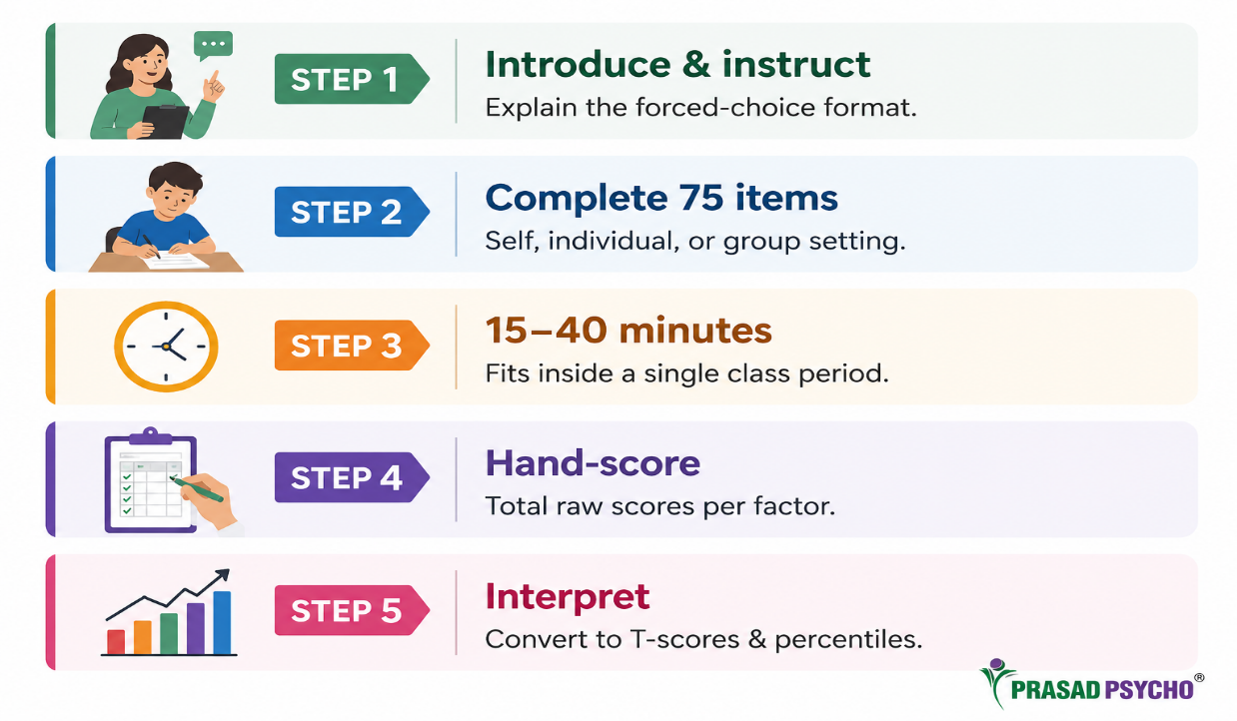
Administration Flow
Identifying strengths through personality assessment
A personality profile isn't a checklist of problems to fix it's a map of natural inclinations. Reading it well means looking for where a child's traits already work in their Favor.
Example strengths profile
Illustrative percentile scores for one child — every profile looks different
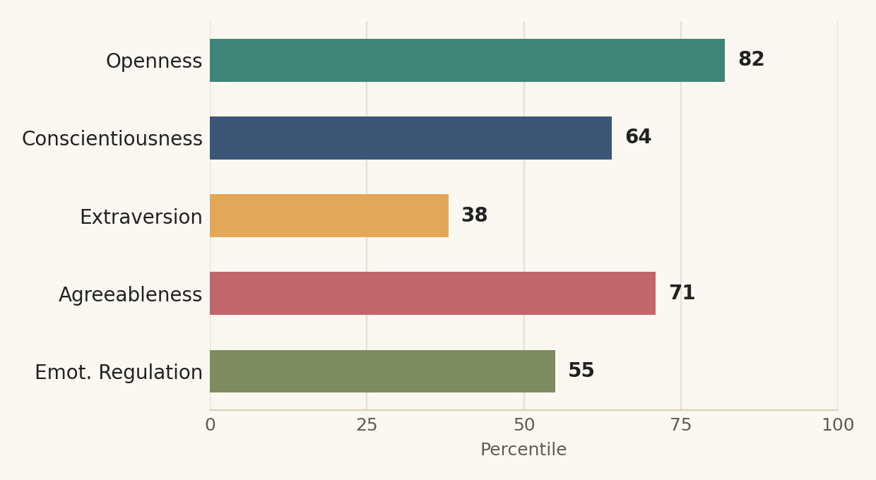
A profile like this points to a curious, cooperative child who may thrive with open-ended projects and peer collaboration, but might need extra support building confidence in large-group settings.
Helping every child thrive according to their personality
The same encouragement doesn't land the same way for every child. Tuning support to a child's actual disposition rather than a one-size-fits-all approach is where personality data earns its keep.
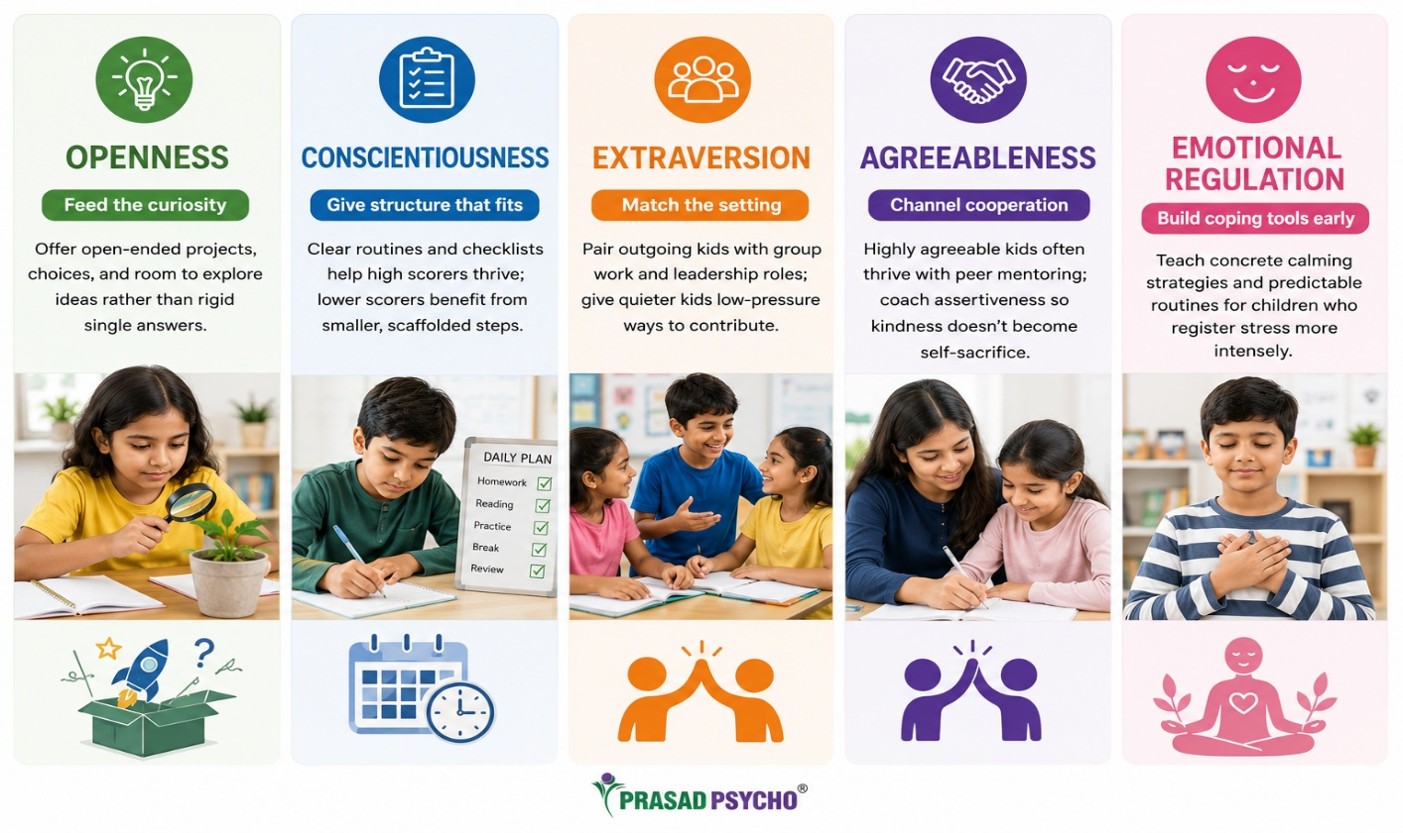
FFPI-C helps students identify early on personality factors affecting how they learn, manage tasks, interact with others and cope with stress. To summarize, it enables teachers and psychologists to adapt their support (more structure, more curiosity, more grouping of activities that fit the temperaments, more teaching of coping skills) so that students are able to improve their academic and emotional adjustment more rapidly.