

AI in Mental Health Care: Friend, Tool, or Future?
Artificial Intelligence is transforming healthcare, and mental health care is one of the fields experiencing the most substantial change virtual counseling aides, mood-monitoring apps, predictive analytics, and AI-driven chatbots have moved from science fiction to everyday psychological services.
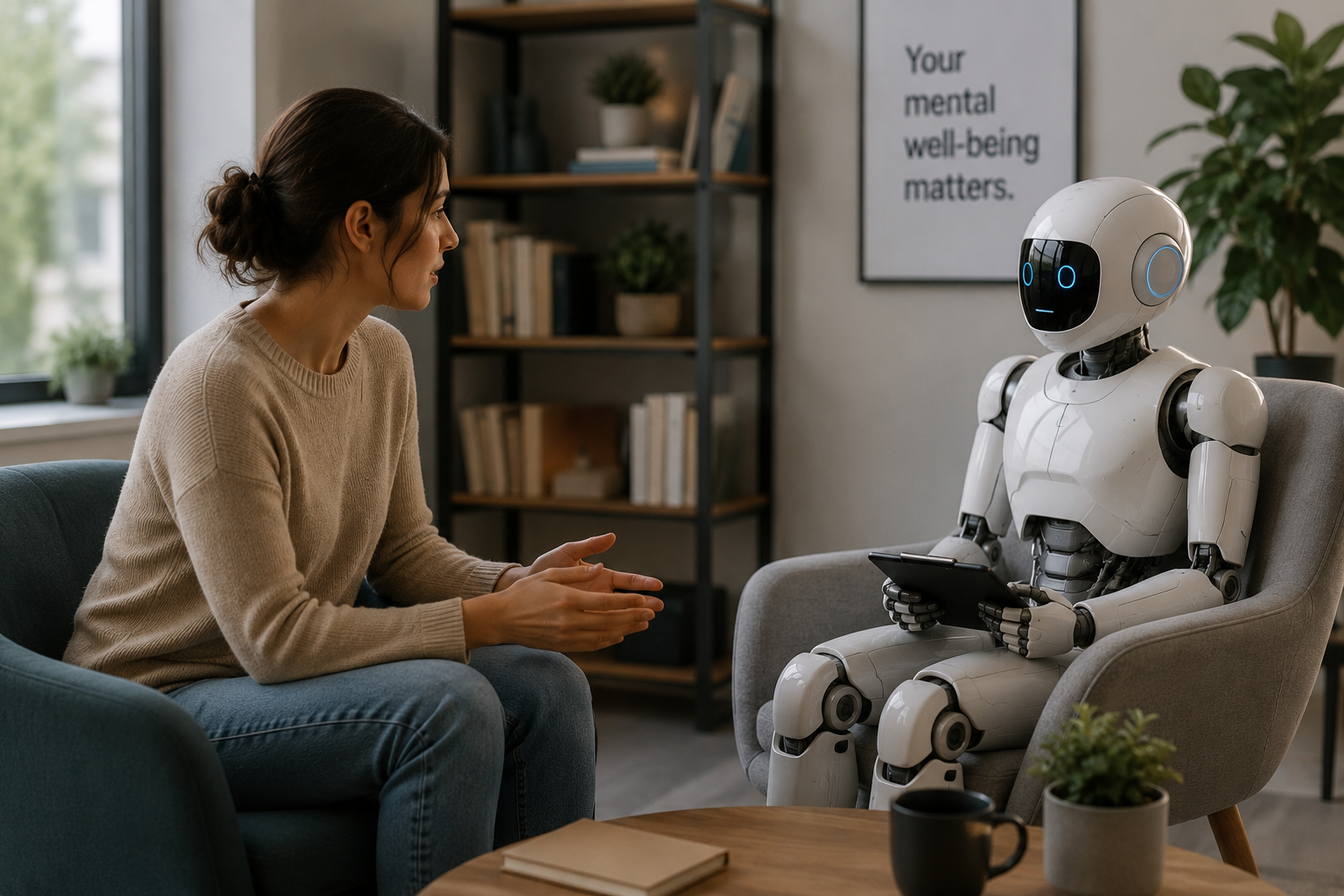
As access to qualified mental health professionals remains limited for many, can AI genuinely help close that gap without replacing what makes care work?
The Emerging Landscape
A New Layer in Psychological Care
With mental health concerns like anxiety, depression, stress, and burnout rising worldwide, AI is emerging as a resource to help bridge the access gap. It offers 24/7 availability, early detection of concerns, personalized guidance, and ongoing monitoring of emotional well-being analyzing behavioral patterns, language, and self-reported feedback to give professionals clearer insight into a person's psychological state.
Key Insight
AI should not be viewed as a replacement for human care or a solution to every problem but as a powerful, expanding resource that, used responsibly, extends the reach of mental health support.
Real Patterns
Where AI Is Already Showing Up
AI as a Friend
Someone facing stigma or limited access uses a chatbot for regular emotional check-ins and coping-skill practice a safe, non-judgmental space that makes the first step toward help-seeking feel less daunting.
AI as a Tool
A counselor uses AI-assisted tracking to monitor a client's progress between sessions and flag emerging risk turning scattered check-ins into a clearer, data-informed picture that sharpens their clinical judgment, not replaces it.
The Collaborative Model
What AI Can and Can't Do
AI can make mental health support more productive, accessible, and available. What it cannot do is replace the compassion, clinical judgment, and human presence that mental health professionals bring to treatment.
AI Assists, Professionals Treat
The most workable future is collaborative: AI supports screening, monitoring, and analysis, while mental health professionals continue to provide personalized treatment, therapeutic guidance, and emotional support.
The Ethical Foundation
As these technologies develop, anonymity, confidentiality, transparency, and ethical implementation aren't optional extras they're what determines whether a tool actually serves the person using it.
The Real Question
The question isn't whether AI belongs in mental healthcare it's how well and ethically it can be woven into a process of healing that has always depended on human connection.
The Uncomfortable Question
Can a Tool Be a Friend?
If a chatbot is always available and never judges, does that convenience risk becoming a substitute for the harder work of human connection?
If AI can detect risk earlier than a person might disclose it themselves, who is responsible for what happens next?
A Path Forward
Using AI Responsibly in Mental Health Care
Getting this right means treating AI as an extension of care, not a replacement for it with clear boundaries around what it's for and what it isn't.
- Keep humans in the loop: AI should inform clinical decisions, not make them independently.
- Prioritise confidentiality: Any tool handling emotional data needs transparent, robust privacy practices.
- Use it to lower the barrier, not replace the bridge: AI can be the first step toward help-seeking it should lead somewhere, not become the destination.
- Stay transparent with users: People deserve to know when they're speaking with an AI system versus a human professional.
Assessment Tool
Starting Your Own Journey of Self-Awareness
Whether AI-assisted or professionally guided, understanding your own mental health starts with the right first assessment.
A Range of Psychological Assessments - Prasad Psycho DigiConnect
Offers a variety of psychological assessments to help you understand how you feel, investigate areas of concern, and build greater self-awareness a safe, accessible starting point for your journey toward mental wellness.
AI can widen the door to mental health support. What happens once someone walks through it still depends on human care.