
Is Social Media Helping or Hurting Mental Health?
Social media has become a vital part of daily life helping us connect, express ourselves, gather information, and form communities with people around the world.
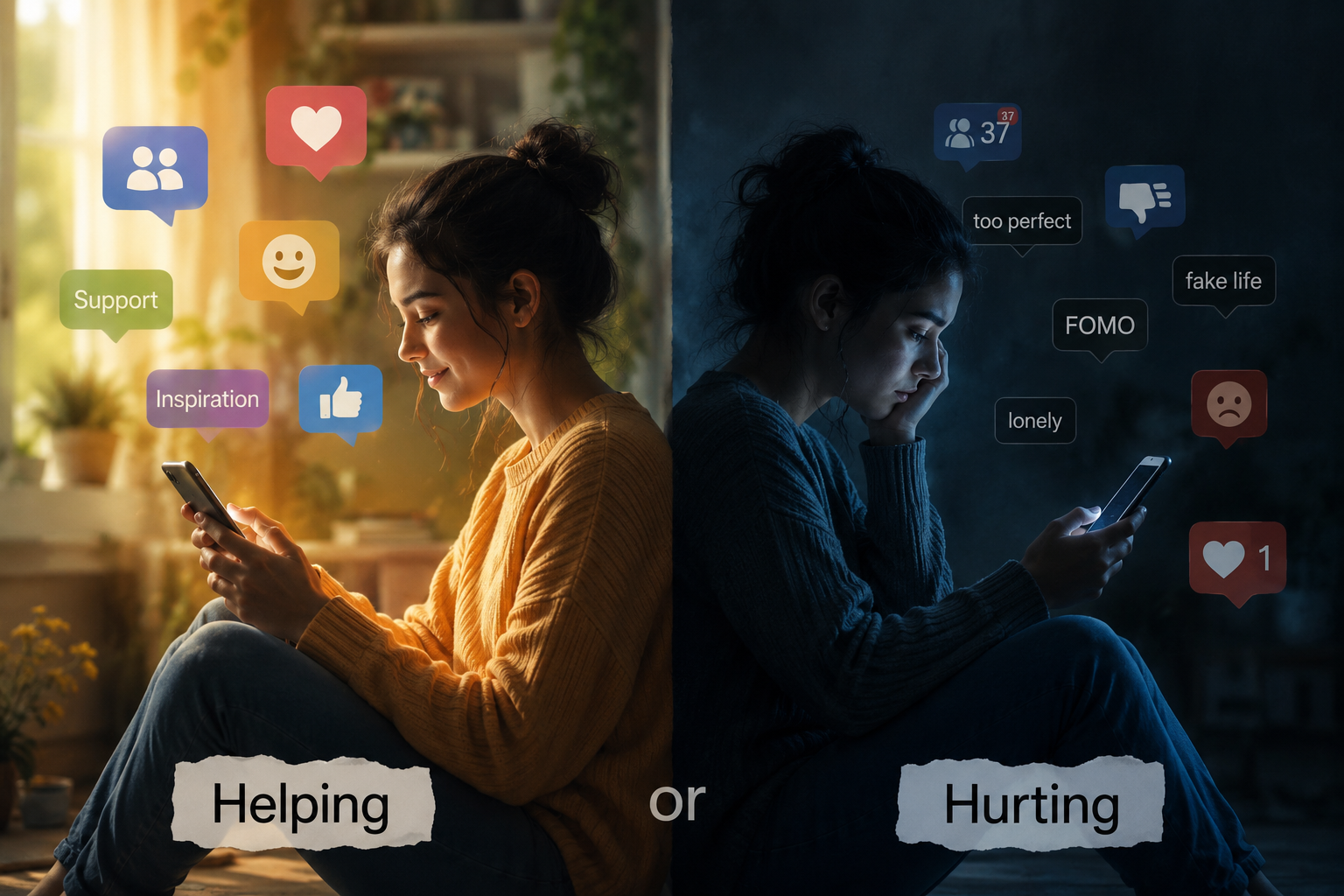
Is the platform the problem, or is it entirely about how we use it?
The Emerging Landscape
A Tool That Cuts Both Ways
Used well, social media offers real benefits: increased social connection, access to mental health and educational content, creative expression, professional development, and membership in genuinely encouraging online communities. For most people, it serves as a source of community and emotional support, not just entertainment.
Key Insight
The effect of social media is not inherently positive or negative the outcome depends heavily on patterns of use: how much, what kind of content, and what it replaces in a person's day.
Real Patterns
Where the Benefit Turns Into Harm
The Comparison Spiral
Constant exposure to curated, idealized posts feeds anxiety, stress, fear of missing out (FOMO), low self-esteem, and unhealthy social comparison even when nothing about the viewer's own life has changed.
The Compulsive Check
Someone who can't set their phone down without discomfort, feels anxious when notifications stop, and notices real-life relationships and responsibilities slipping a pattern that looks like habit long before it's named as a problem.
The Cost of Unhealthy Use
When Connection Becomes Compulsion
Excessive use is also linked to sleep problems, poor concentration, emotional exhaustion, and fewer opportunities for genuine in-person interaction. Addiction to social networking platforms describes people continuing to use them compulsively despite clear, adverse effects on their lives.
The Warning Signs
Lack of control over screen time, obsession with notifications, neglecting responsibilities, anxiety about social media unavailability, and reduced engagement with real-life relationships are the signals worth taking seriously.
It's a Spectrum, Not a Switch
Most users move somewhere along a spectrum from mindful use to compulsive use rarely as a single decision, but as small habits (checking "just once more") that accumulate into a pattern.
Healthy Use Is a Skill
Setting screen-time limits, taking regular digital breaks, prioritizing offline relationships, following positive and informative content, and practicing mindful engagement are learnable habits not just willpower.
The Uncomfortable Question
Whose Responsibility Is Healthy Use?
If platforms are designed to maximise engagement, how much of "self-control" is really being asked to fight against deliberate design?
If a person feels worse after scrolling but keeps scrolling anyway, is that still a choice or has it become a compulsion?
A Path Forward
Getting the Benefit Without the Cost
This isn't a case for quitting social media for most people, that's neither realistic nor necessary. It's a case for using it deliberately rather than compulsively.
- Set real limits: Screen-time boundaries work best when they're specific and visible, not just intended.
- Take digital breaks: Regular, scheduled time away resets the compulsive-checking loop.
- Protect offline relationships: Treat in-person connection as non-negotiable, not as whatever's left over.
- Curate, don't just consume: Follow content that informs or uplifts; notice what leaves you feeling worse.
Assessment Tool
Recognising Overuse Before It Compounds
With healthy digital habits and honest risk awareness, users can get more out of social media while protecting their mental well-being.
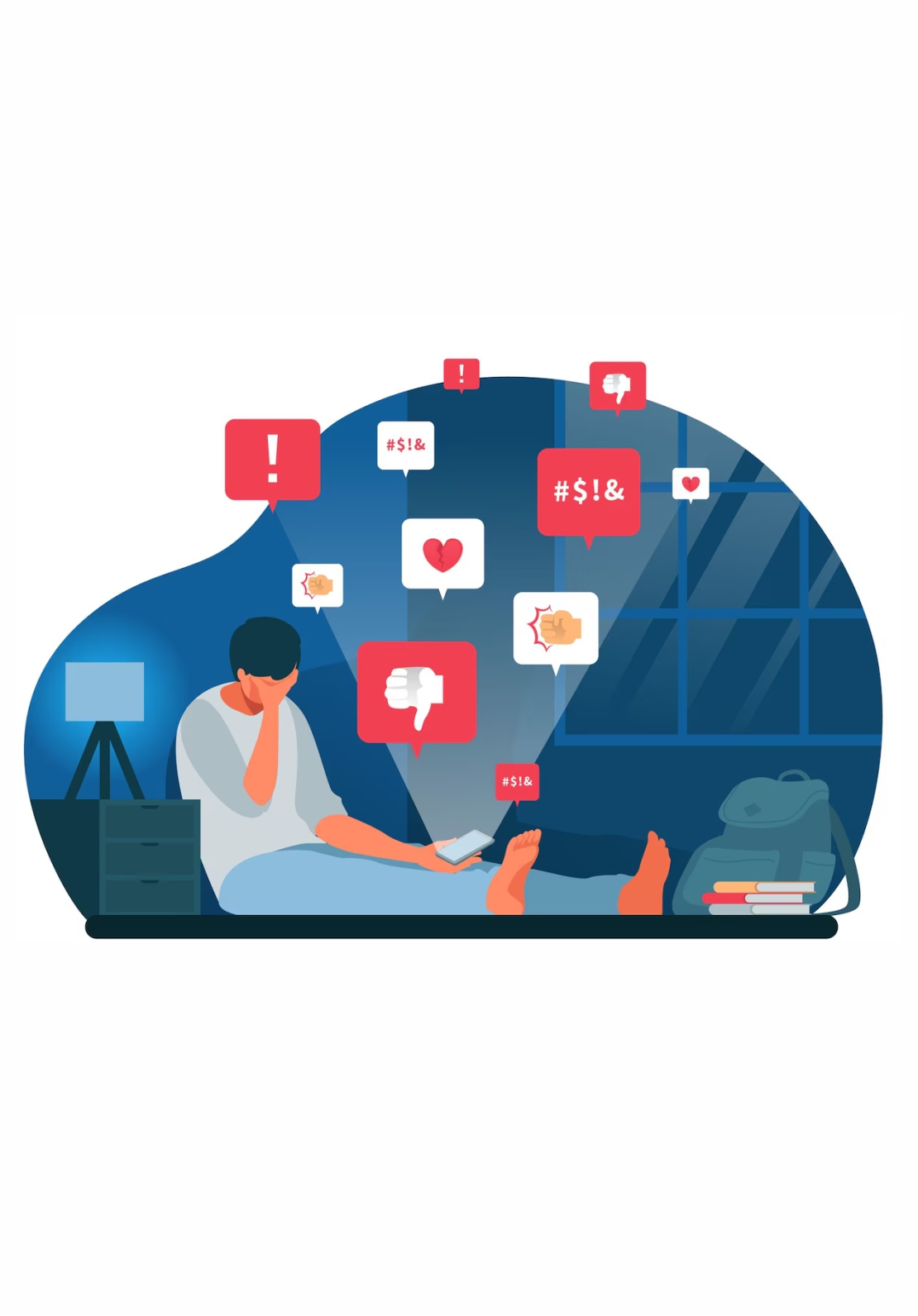
Social Media Addiction Scale
Facilitates the recognition of social media overuse and risky digital behavior helping mental health experts, teachers, and concerned individuals promote healthier attitudes toward technology.
Social media isn't the enemy of well-being unexamined habit is. Awareness is what turns a risky pattern into a manageable one.