

PCOS and PMS: More Than Just Physical Symptoms
When people talk about women's health, the conversation tends to stay at cramps, irregular periods, weight changes, and hormones. But conditions like PMS and PCOS reach well beyond the physical.
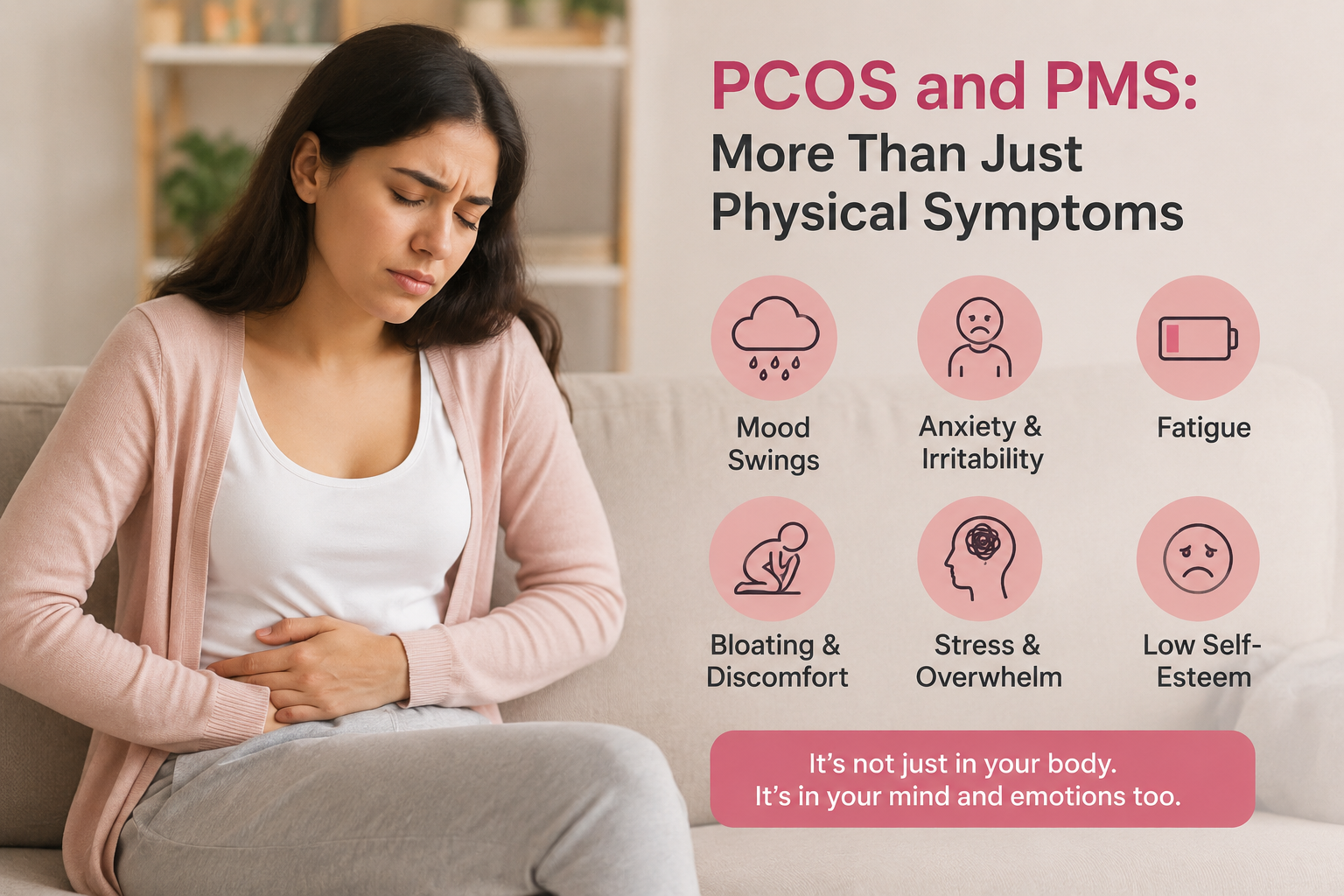
What happens when a hormonal condition is treated only as a physical one?
The Emerging Landscape
Two Conditions, One Overlooked Dimension
PMS symptoms irritability, mood swings, anxiety, exhaustion, poor concentration, and insomnia appear before menstruation and, despite seeming temporary, can disrupt work, relationships, and studies. PCOS (sometimes discussed as PMOS) is a more complex hormonal and metabolic disorder involving irregular periods, acne, weight changes, unwanted hair growth, and difficulty conceiving, with links to insulin resistance and cardiovascular risk.
Key Insight
Both conditions carry a mental health dimension that is often missed entirely: hormonal shifts can affect brain chemistry and emotional regulation, increasing stress, irritability, sensitivity, and social withdrawal symptoms frequently dismissed as "just hormones."
Real Patterns
Where the Emotional Toll Shows Up
The PMS Disruption
A person who is consistently sharp and composed finds themselves unable to concentrate, more irritable than usual, and withdrawing socially in the days before their period a pattern easy to normalise as "that time of the month" rather than something worth naming and tracking.
The PCOS Weight on Self-Worth
A counselor uses AI-assisted tracking to monitor a client's Beyond the physical symptoms, a person managing PCOS may quietly carry lowered self-esteem and depressive feelings tied to changes in their body and fertility concerns an emotional load that rarely comes up in a physical consultation.
The Psychological Cost
When Hormonal Symptoms Are Treated as "Just Physical"
Because PMS and PCOS present with visible physical symptoms, their emotional and behavioral effects are easy to overlook both by the person experiencing them and by the systems meant to support them.
The Brain Chemistry Link
Hormonal changes don't stay confined to the reproductive system they influence brain chemistry and the ability to regulate emotion, which is why stress and irritability during these conditions are physiological, not simply a mood or attitude issue.
The Normalisation Problem
Emotional and behavioral symptoms are frequently dismissed as ordinary hormonal fluctuation which means they often go unaddressed long after they've started affecting daily functioning.
Why Early Detection Matters
Screening for emotional and behavioral symptoms not just physical ones helps determine the seriousness of a case and guides appropriate intervention, preventing complications that compound when left unaddressed.
The Uncomfortable Question
Are We Treating the Whole Person?
If a hormonal condition affects mood, cognition, and self-esteem, why does treatment so often stop at the physical symptoms?
If emotional symptoms are dismissed as "just hormones," how many people never get screened for something that's actually treatable?
A Path Forward
A Holistic Approach to PMS and PCOS
Addressing these conditions can't be confined to managing physical symptoms alone. A more complete approach combines early screening, healthy living, and emotional and professional support.
- Screen for both dimensions: Assess emotional and behavioral symptoms alongside physical ones, not as an afterthought.
- Name the pattern: Track mood, concentration, and irritability alongside the menstrual cycle rather than treating each episode as unrelated.
- Involve mental health support: Emotional and professional assistance should sit alongside gynecological or endocrine care, not separate from it.
- Build sustainable habits:Healthy living practices support both hormonal balance and emotional regulation over time.
Assessment Tool
Screening for the Full Picture
Early assessment is what allows healthcare professionals to guide someone properly, before symptoms compound into more serious complications.
A woman's hormonal health and her emotional well-being aren't separate conversations they're the same one, looked at fully.